
Chevrolet Equinox Owners Manual: Certification/Tire Label
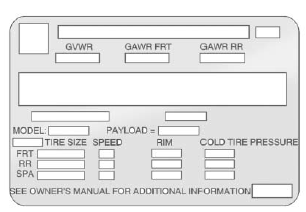
Label Example
A vehicle-specific Certification/ Tire label is attached to the center pillar (B-pillar).
The label may show the size of the vehicle's original tires and the inflation pressures needed to obtain the gross weight capacity of the vehicle. The label shows the gross weight capacity of the vehicle. This is called the Gross Vehicle Weight Rating (GVWR).
The GVWR includes the weight of the vehicle, all occupants, fuel, and cargo.
The Certification/Tire label may also show the maximum weights for the front and rear axles, called the Gross Axle Weight Rating (GAWR). To find out the actual loads on the front and rear axles, weigh the vehicle at a weigh station. Your dealer can help with this. Be sure to spread the load equally on both sides of the centerline.
| Caution Overloading the vehicle may cause damage. Repairs would not be covered by the vehicle warranty. Do not overload the vehicle. |
Warning
Things inside the vehicle can
strike and injure people in a
sudden stop or turn, or in a
crash.
|
 "Steps for Determining Correct
Load Limit-
"Steps for Determining Correct
Load Limit-
Locate the statement "The
combined weight of
occupants and cargo should
never exceed XXX kg or
XXX lbs." on your vehicle's
placard.
Determine the combined
weight ...

Other materials:
Front Wheel Drive Shaft Seal Replacement - Left Side Automatic Transmission Unit
Front Wheel Drive Shaft Seal Replacement - Left SideCalloutComponent NamePreliminary ProceduresRaise the vehicle. Refer toLifting and Jacking the Vehicle.Remove the left wheel drive shaft. Refer toFront Wheel Drive Shaft Replacement.1Left Front Wheel Drive Shaft Oil SealTip:For seal removal use J 61 ...
