
Chevrolet Equinox Service Manual: Parking Brake Rear Cable Replacement (Right) Parking Brake
Special Tools
J-37043Parking Brake Cable Release Tool
Removal ProcedureRelease the park brake.Raise and support the vehicle. Refer toLifting and Jacking the Vehicle.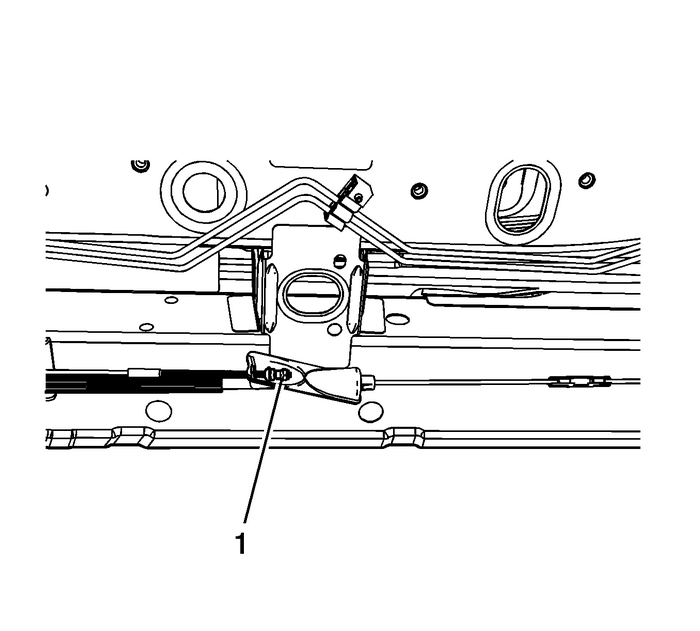
Loosen, but do not remove the park brake equalizerlocknut-(1).
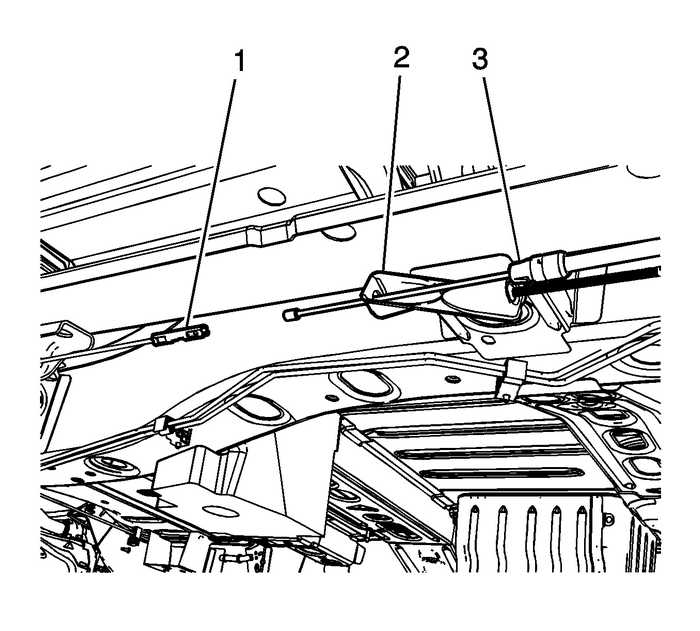
Disconnect the front park brakecable-(1)-from the right park brakecable.Using theJ-37043Parking Brake Cable Release Tool, release the park brake cable from the park brakeequalizer-(2)-by compressing the locking tabson the cable conduit-(3).
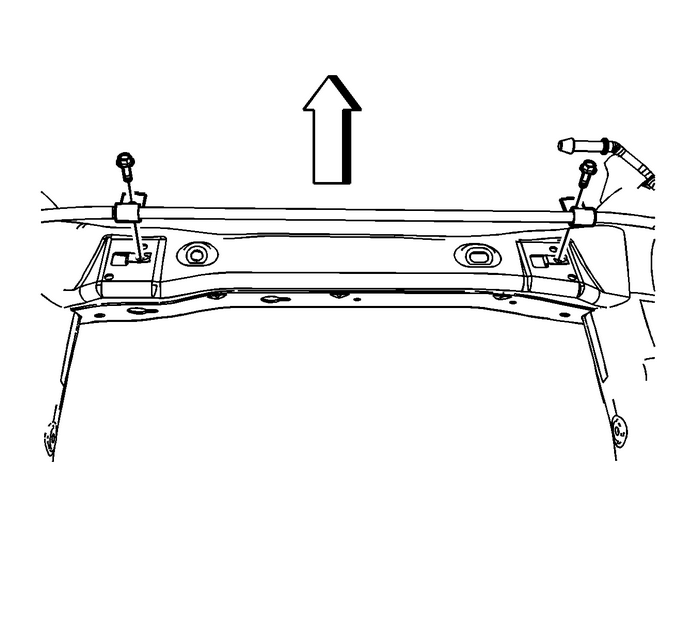
Remove the-2-park brake cable bracketbolts located on top of the crossmember above the rear suspensionmodule.Remove the park brake cable bracket bolt from the lowertrailing arm.
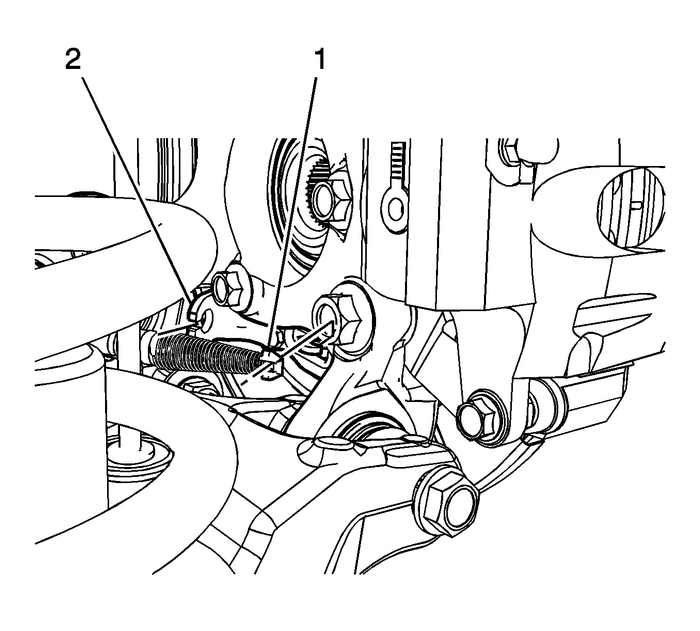
Disconnect the park brake cableeyelet-(1)-from the park brakeactuator.Using theJ-37043Parking Brake Cable Release Tool, compress the locking tabs on the park brake cableconduit.Remove the park brake cable from the cablebracket-(2).Installation ProcedurePosition the park brake cable over the rear suspensionmodule.
Connect the park brake cableeyelet-(1)-to the park brake actuator.Compress the park brake cable spring and install the parkbrake cable to the cable bracket-(2).Ensure the locking tabs on the cable conduit are fullyengaged to the cable bracket.
Caution:Refer toFastener Caution.
Install the park brake cable bracket bolt to the lowertrailing arm and tighten to-25-Y(18-lb-ft).
Install the-2-park brake cable bracketbolts and tighten to-25-Y(18-lb-ft).Position the park brake cable to the equalizer.
Connect the front park brakecable-(1)-to the right park brakecable.Install the park brake cable to the park brakeequalizer-(2).Ensure the locking tabs on the cableconduit-(3)-are fully engaged to theequalizer.
Loosely install the park brake equalizerlocknut-(1).Adjust the park brake. Refer toParking Brake Adjustment.
 Parking Brake Lever Replacement Parking Brake Lever or Pedal
Special ToolsJ-37043Parking Brake Cable Release ToolRemoval ProcedureRaise and support the vehicle. Refer toLifting and Jacking the Vehicle.Loosen the park brake cablelocknut-(1)-at the equalizer to r ...
 Parking Brake Rear Cable Replacement (Left) Parking Brake
Special ToolsJ-37043Parking Brake Cable Release ToolRemoval ProcedureRelease the park brake.Raise and support the vehicle. Refer toLifting and Jacking the Vehicle.Remove the park brake equalizerlocknu ...
Other materials:
Diagnostic Repair Verification
Note:After a repair has been made, some DTCs require the ignition to be turned OFF thenback ON before the scan tool function will clear the DTC.Ignition OFF.Install any components or connectors that have been removed or replaced during diagnosis.Perform any adjustment, programming or setup procedure ...
